Mental Health Counseling
ABC of NC offers evidence-based counseling and psychotherapy services for individuals of all ages affected by neurodivergence, including autistic individuals and their families.
We provide individual, family, and couples counseling to support the emotional, behavioral, and mental health needs of children, teens, adults, couples, and families.
Using approaches such as cognitive behavioral therapy, behavioral modification, collaborative problem-solving, and parent education, our counselors provide compassionate, individualized care that promotes emotional well-being, strengthens skills, and supports the entire family.
Individual Counseling
Family Counseling
Family counseling can be beneficial for families navigating challenges related to parenting, behavior, communication, family transitions, stress, conflict, disability, mental health concerns, or other family dynamics.
Couples Counseling
Couples counseling supports partners in building stronger communication, improving understanding, navigating conflict, and strengthening their relationship. Our counselors have experience supporting neurodivergent couples, including relationships in which one or both partners are autistic, have ADHD, or experience other forms of neurodivergence.
Couples counseling may focus on topics such as communication styles, emotional connection, problem-solving, parenting, life transitions, sensory differences, executive functioning challenges, relationship expectations, and navigating the unique strengths and challenges that can arise within neurodiverse relationships.
Counseling services are available to both ABC of NC families and members of the broader community.
Importantly, families do not need to have a child enrolled in counseling services at ABC of NC to participate in family counseling or couples counseling. Services may be accessed:
-By families whose child receives other ABC of NC services, such as ABA therapy, school services, or supplemental services, but does not receive individual counseling.
-By families who do not have a child enrolled in any ABC of NC service.
-By parents, caregivers, couples, siblings, or other family members seeking support for family-related or relationship-related concerns.
Our counseling team can help determine whether individual, family, couples counseling, or a combination of services is the best fit for your needs.
Refer a Client
Do you have a client in mind that you would like to refer to our services? Use the button below to get in touch with our clinical team and we'll get in touch with you!
View our Counseling Flyer
Our counseling flyer features all of our mental health counselors as well as the services and support we offer. Please feel free to share with your network and community!
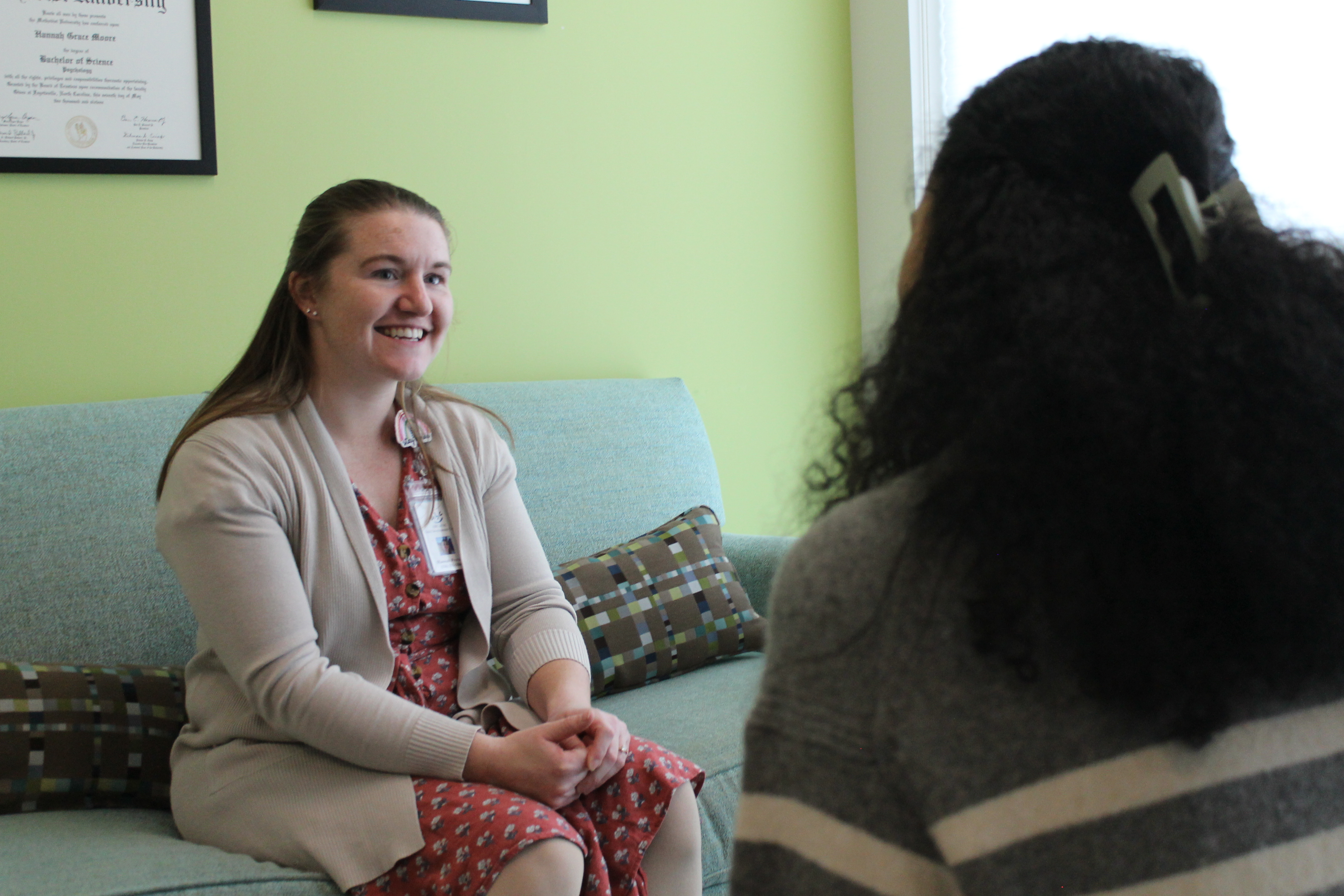
Our Counseling Clinical Staff
Hannah Prevatt, MS, Ed. S, LCMHC, NCC
With empathy, support, and understanding, she collaborates with clients and their families in a way that best suits that family. She is passionate about counseling’s emphasis on wellness and is excited about applying that at ABC of NC.
Hannah approaches each relationship with genuine curiosity as to who the client is, what their needs are, and what can be done to best serve that client. In her spare time, Hannah enjoys rock climbing, reading, and playing games with her husband. Hannah is verified by Psychology Today.
Jasmine Henderson Lambeth, MSW, LCSW
ABC of NC’s counselor, Jasmine Henderson Lambeth, is accepting new clients (children, adults, and families within the Autism Community.) Jasmine is verified by Psychology Today.
Liz LaPrade, RBT, LCSW-A
Getting Started
If you are interested in counseling services, please contact our team to discuss your concerns, ask questions, and schedule an initial appointment. We are happy to help you identify the services that best support your goals.
Accepted Insurance
The Autism Clinic is currently credentialed with the following insurance providers. Please contact your plan administrator to confirm your specific coverage and benefits.
Blue Cross Blue Shield of NC (BCBS)
Cigna
United Healthcare
AmeriHealth Caritas of NC
Carolina Complete Health Inc
Healthy Blue of NC
United Health of NC
Wellcare of NC
Partners Health Management
Trillium Health Resources
Vaya Health
If your insurance provider is not listed, please contact o linical practice manager, at (336) 251-1180, ext. 135. For information regarding coverage of specific ABA services, please contact your employer and/or your insurance provider.
Frequently Asked Questions
Counseling is a space where the counselor and the individual (or family) meet on a consistent basis to discuss a variety of concerns surrounding their lives.
Counselors consider each individual's past and present circumstances when providing counseling services, creating an individualized treatment plan for each person seeking services.
We provide a supportive, unbiased approach and cultivate a safe space for individuals, couples, and families to present their concerns openly.
Anyone who is directly or indirectly affected by neurodivergence can seek counseling here. This includes individuals diagnosed with Autism, ADHD, dyslexia, or other variants of neurological differences.
All of these acronyms are different approaches to therapy and tools that counselors can use to provide therapeutic services.
While they differ slightly in approach, they are all evidence-based and can help improve mental health and provide coping skills during stressful situations.
-CBT: Cognitive Behavioral Therapy
-DBT: Dialectical Behavioral Therapy
-ACT: Acceptance and Commitment Therapy.
If there is a medical crisis or a life-threatening emergency, please call 9-1-1 or go to your closest emergency room. If you are experiencing suicidal thoughts/intent, you can call OR text the National Suicide Prevention Lifeline at 988 at any time.
ABC of NC does have an on-call phone number. When a crisis arises after business hours, the phone number is 336-971-7788. Another resource to utilize is Mobile Crisis, a community-based behavioral health service that responds directly to individuals experiencing mental health, substance use, or developmental disability crises. The phone number is 1-866-275-9552.
No. Counseling services are available to both ABC of NC families and members of the broader community.
No. Families can participate in family counseling even if their child does not receive individual counseling services.
Yes. Families may access counseling services regardless of whether their child receives counseling. Counseling can be provided alongside ABA therapy, school services, supplemental services, or as a standalone service.
Individual counseling is a one-on-one service between a client and a counselor that focuses on the client's personal goals and concerns. Family counseling focuses on relationships, communication, problem-solving, and family dynamics. Sessions may include parents, caregivers, siblings, and/or the identified client, depending on treatment goals.
Yes. We offer couples counseling for partners seeking to strengthen communication, improve understanding, navigate conflict, and build healthier relationships. Our counselors have experience supporting neurodivergent couples, including relationships in which one or both partners are autistic, have ADHD, or experience other forms of neurodivergence.
Counseling may help with:
-Anxiety
-Depression
-Stress and burnout
-Emotional regulation
-Social and relationship challenges
-Family conflict
-Parenting concerns
-Life transitions
-Self-esteem and self-confidence
-Neurodiversity-related challenges
-Communication and relationship concerns
The first step is to schedule an initial evaluation with one of our counselors. During this appointment, the counselor will learn more about your concerns, answer questions, and help determine the services that best meet your needs.
Coverage varies by insurance plan. Our team can help you understand available options and answer questions about insurance and payment prior to scheduling services.
Neurodiversity recognizes that differences in how people think, learn, and process the world—including autism, ADHD, dyslexia, and other neurological variations—are natural aspects of human diversity rather than disorders to be "fixed."
Instead of focusing on deficits, a neurodiversity-affirming approach emphasizes understanding, acceptance, and support while recognizing the unique strengths and perspectives neurodivergent individuals bring to their communities.
By creating environments that are inclusive and accommodating of different ways of thinking and communicating, society can foster greater belonging and better outcomes for everyone.
NC HealthConnex
The US health care system is experiencing a technological transformation. With the changes in value-based care reimbursement models, sharing data will be imperative.
That is why we will work to connect our electronic medical record system with North Carolina’s state-designated health information exchange, NC HealthConnex, which is operated by the North Carolina Health Information Exchange Authority (NC HIEA) housed in the North Carolina Department of Information Technology. For employees and clinicians who have direct contact with patients, we will provide additional training and resources to help educate patients about NC HealthConnex and how to use this new tool.
There will be more information on those opportunities to come. The process can take several months depending on the technical configuration requirements. During that time, we will keep you apprised of the status of this project. If you have any questions, contact the clinical practice manager Darlene Steele at (336) 251-1180, ext. 135.
Visit the NC HealthConnex website for more details.
Connect With Us
Need assistance? Click below to see which department can best help with your question.